Turning Passive Readers into High-Intent Leads
Transforming blog traffic into a scalable conversion engine, increasing lead form visibility by 3× and driving a 15% lift in qualified leads.
Measurable business impact
I led the transformation of GoHealth’s blog from a passive content channel into a high-performing conversion surface. By embedding conversion directly into the reading experience, we aligned user intent with business goals and unlocked a new acquisition channel that consistently captured high-intent users.
Lead Gen
Drove a 15% increase in qualified leads by introducing a low-friction entry point directly within blog content.
Engagement
Increased interaction with the lead form by 22%, allowing users to act at the moment of interest.
Visibility
Achieved a 3× increase in lead form visibility by removing reliance on hidden or end-of-page CTAs.
Conversion Efficiency
Improved conversion rates by 18% through simplified UX and reduced friction.
Client
GoHealth
Industry
Healthcare/Medicare Enrollment
Role
Product Designer
Secondary Role
UX Researcher
Timeline
4 Weeks
Location
Chicago/Remote
From passive content to conversion engine
GoHealth’s blog attracted strong organic traffic, but it functioned primarily as a content destination. Analytics showed that over 50% of users struggled to navigate from blog content to the lead form, with the highest drop-off occurring on long-scroll pages.
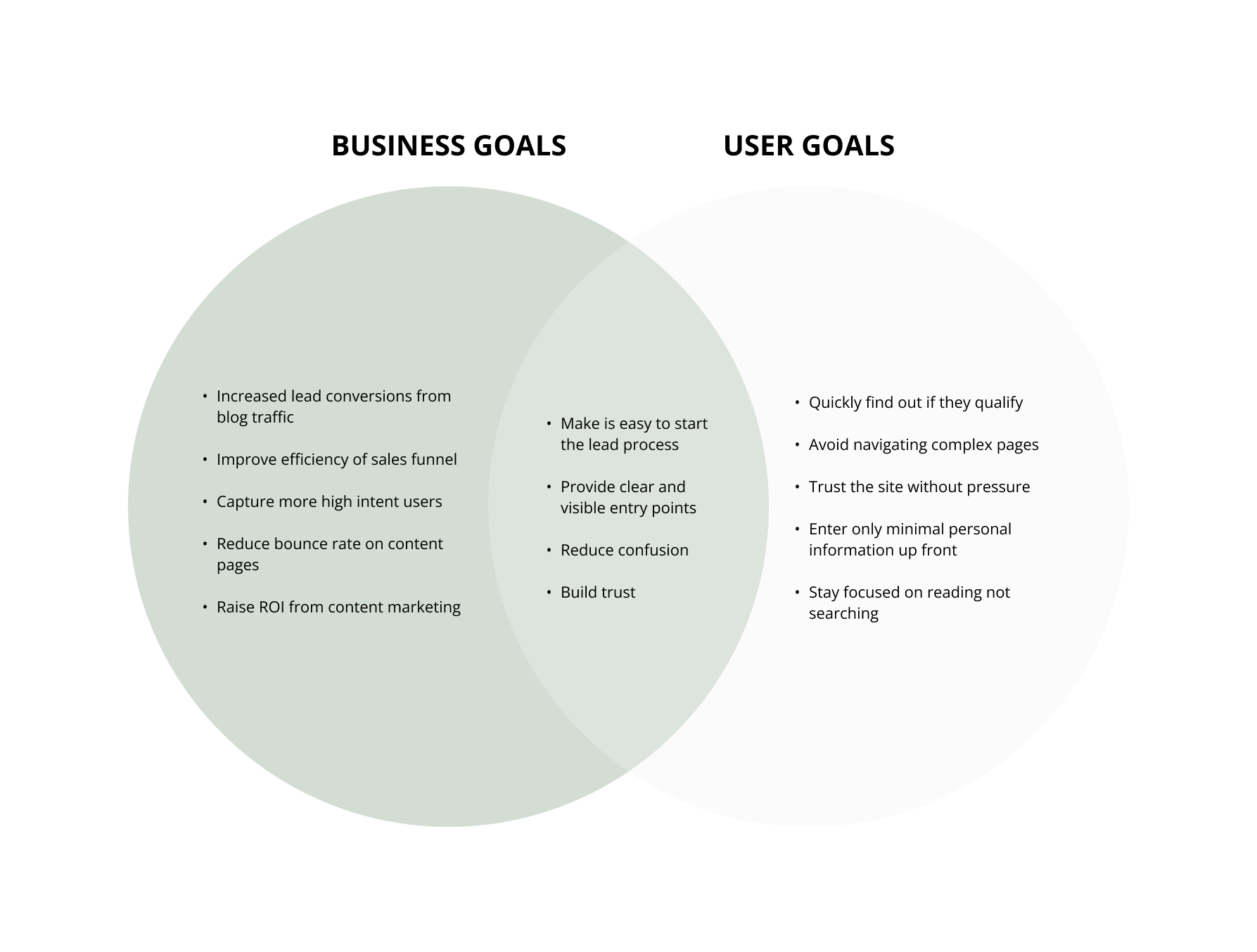
Through collaboration with product and marketing stakeholders, we aligned on a shared opportunity: capturing intent earlier in the journey instead of forcing users into a separate conversion path.
Designing for intent, not interruption
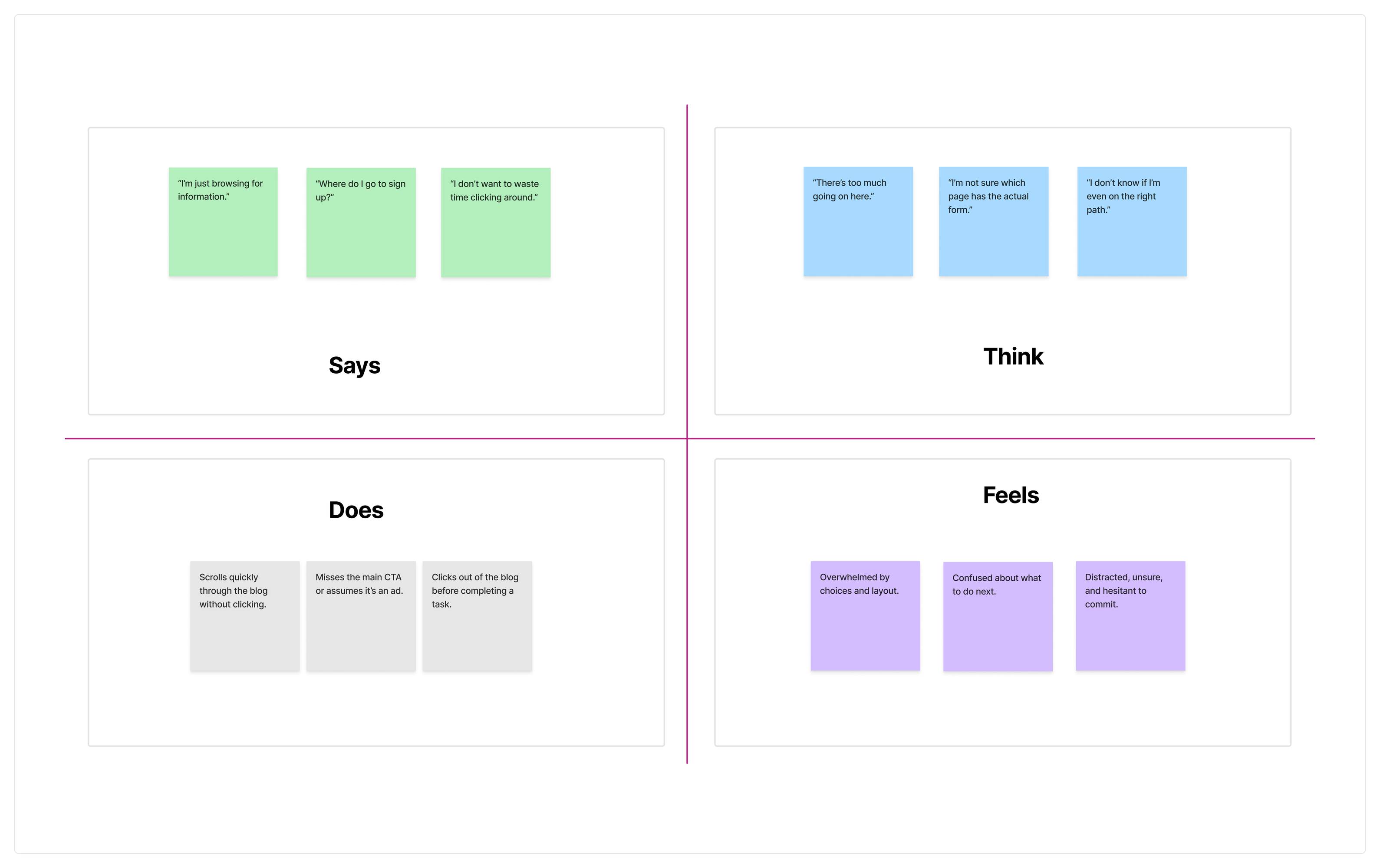
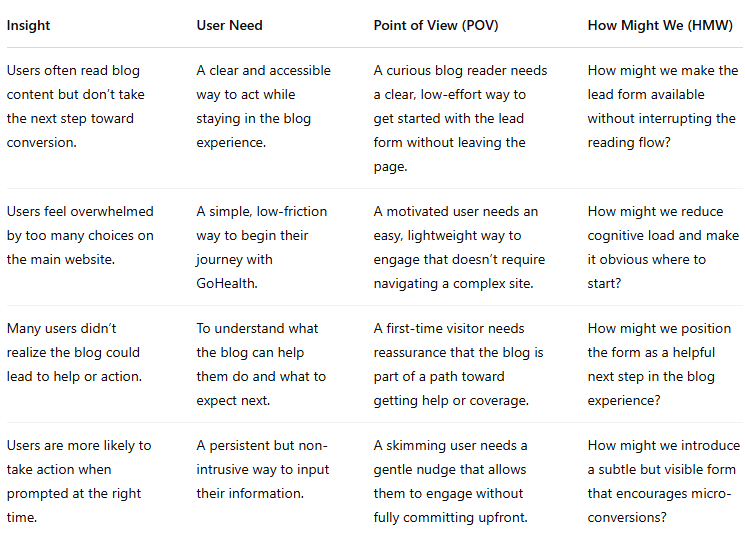
Moderated usability testing revealed that 82% of users didn’t know where to start after reading, and many didn’t recognize the lead form as the next step.
Rather than increasing friction with aggressive CTAs, I introduced a persistent mini lead form that stayed within the reading flow.
Capturing demand at the right moment
Session replay data showed users rarely reached the bottom of blog pages, meaning traditional CTAs were ineffective.
Rather than optimizing placement alone, I focused on timing and context—ensuring users could act at the moment of peak engagement.
This approach was validated through testing, where users naturally interacted with the form when it felt like a continuation of their journey, not a disruption.


Driving alignment across
teams
This work required close collaboration across product, marketing, and engineering. I facilitated discussions to align on:
-
What defines a “qualified lead”
-
How much information is required upfront
-
How to balance conversion with user trust
These decisions directly shaped the simplified form experience and ensured the solution met both user and business goals.
The final experience introduced a streamlined path from content to conversion, allowing users to enter minimal information before transitioning into the full enrollment flow.
This approach reduced cognitive load, preserved engagement, and improved clarity, especially for older users navigating complex healthcare decisions.
Experience & interaction design
The outcome
The blog evolved into a scalable lead generation engine, demonstrating how aligning UX strategy with real user behavior can directly drive measurable business outcomes.